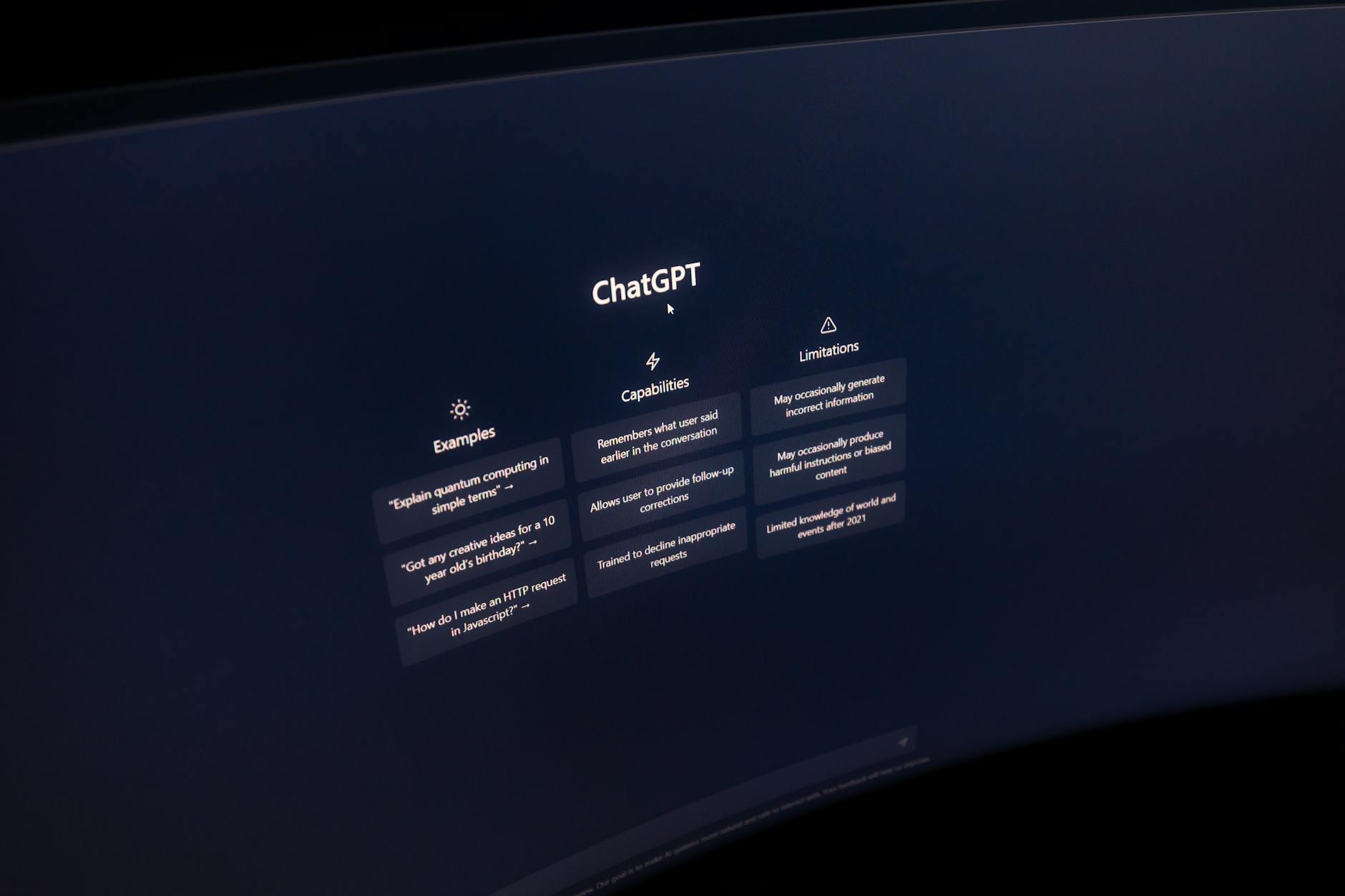
ChatGPT vs Gemini Business: Key Differences
Choosing an AI assistant in 2026 depends less on raw capability and more on how each solution fits into an organization’s existing ecosystem.
Core capabilities overlap
Both platforms can draft emails, summarize transcripts, generate SQL/DAX queries, and create slide decks. A benchmark of 50 business prompts rated ChatGPT 4.2 and Gemini 4.1 on a 1‑5 scale, showing a small performance gap.
Microsoft 365 integration – ChatGPT Business
Native connectors embed ChatGPT in Teams, SharePoint, and Excel, while Zapier/Make supports custom workflows across CRM, ticketing, and telephony systems.
Security includes SSO via Azure AD, SCIM provisioning, SOC 2 Type II reporting, and a zero‑training‑by‑default policy to prevent model retention unless enabled.
Google Workspace integration – Gemini Business
Gemini operates inside Gmail, Docs, Sheets, and Meet, enabling quick drafting and real‑time web grounding for up‑to‑date information.
Native connections to BigQuery, Looker, and Vertex AI are available, and cost is comparable when bundled with an existing Workspace subscription.
Cost comparison
| Feature | ChatGPT Business | Gemini Business |
|---|---|---|
| Base price (per user / month) | $24–$26 | Included with Workspace |
| Enterprise add‑ons (SOC 2, SSO) | Included in Enterprise tier | Included in Business tier |
| Integration ecosystem | Teams, SharePoint, Excel, Zapier/Make | Gmail, Docs, Sheets, Meet, BigQuery |
| Real‑time web grounding | Limited (knowledge cut‑off 2025) | Enabled |
A two‑week pilot with five users typically saves 2–3 hours per user per week, reducing effective cost per output to about $1.50 from $5.00.
Decision framework – five steps
- Map high‑volume workflows. Identify top tasks such as email drafting, transcript summarization, and SQL generation.
- Run a parallel pilot. Deploy both assistants to a small group for two weeks and record time saved, quality, and satisfaction.
- Test integrations. Verify prompt‑retention policies, audit‑log requirements, and SSO provisioning.
- Calculate cost‑per‑useful‑output. Divide total pilot cost by the number of high‑quality outputs produced.
- Define primary and fallback tools. Choose a default assistant for most tasks and a specialist fallback for edge cases.
Common pitfalls and mitigation
- Skipping pilot testing locks teams into suboptimal workflows.
- Over‑purchasing enterprise tiers inflates budgets without ROI.
- Neglecting prompt‑literacy training reduces model efficiency; a short workshop can improve quality scores.
Hybrid AI Playbook
- Route email and chat to Gemini. Use Gmail and Docs connectors to draft responses, then push content to the ticketing system via API.
- Leverage ChatGPT for data‑rich tasks. Pull metrics from analytics tools, generate SQL in Excel, and feed results into automated scripts.
- Maintain a single compliance layer. Enforce zero‑retention on both assistants and centralize audit logs in a SIEM.
Security and compliance considerations
Data residency, encryption at rest and in transit, and audit trails are essential. ChatGPT Business supports customer‑managed keys in Azure Key Vault; Gemini Business integrates with Google Cloud KMS. Both retain logs for up to 10 years to meet SOX and HIPAA.
Use‑case example: Financial services
A regional bank deployed ChatGPT for risk‑scenario modeling and Gemini for client communication. Integrating ChatGPT with Snowflake reduced simulation time from 30 minutes to under two minutes, while Gemini cut advisor preparation time by 35 %. The combined approach yielded a 22 % efficiency gain while maintaining compliance.
Evaluating total cost of ownership
Beyond subscription fees, organizations must budget for implementation services, data migration, and ongoing maintenance of custom connectors. A mid‑size firm that invested $30,000 on a three‑month rollout, $12,000 on staff training, and $5,000 annually on integration upkeep saw a first‑year cost of $47,000. With a 2.5‑hour weekly time saving at $50 per hour, the investment paid off in 6–8 months.
Scalability and long‑term growth
Both platforms scale horizontally. ChatGPT Business offers tiered throughput limits with dedicated capacity options; Gemini Business leverages Google’s multi‑regional infrastructure to route requests locally. Volume discounts are advisable for growth plans.
Real‑world deployment timelines
A typical rollout follows discovery (2 weeks), pilot (3 weeks), integration testing (4 weeks), and launch (2 weeks). Agile sprints can compress the timeline to 8–10 weeks.
Optimizing team adoption
Adoption hinges on usability and ongoing education. Role‑specific prompt libraries, quick‑access buttons, and usage metrics highlight value quickly. A change‑management program with webinars, tips, and assessments can lift active user rates from 45 % to 78 % within six months.
Extended benchmark results
A Q3 2026 study evaluated 120 enterprise prompts across finance, legal, marketing, and R&D. Human ratings averaged 4.15 for ChatGPT and 4.12 for Gemini, with median response times of 1.2 s and 1.0 s respectively. Gemini’s real‑time web grounding reduced information‑staleness incidents by 38 % in research‑intensive tasks.
Enterprise use‑case deep dives
Legal document drafting. A multinational law firm used ChatGPT to automate clause extraction, generating 3,200 draft contracts and cutting attorney review time by 45 %. Gemini’s integration with Docs enabled collaboration on client briefs, reducing regulatory filing turnaround by 30 %.
Supply‑chain demand forecasting. Coupling Gemini’s real‑time retrieval with BigQuery improved forecast accuracy by 7 % and shortened data‑preparation from 48 hours to 6 hours.
Customer‑support automation. Deploying ChatGPT via Zapier handled 65 % of routine inquiries, while Gemini’s live‑web search resolved 22 % of escalated cases needing up‑to‑date references.
Implementation roadmap – detailed steps
- Stakeholder alignment. Workshops with IT, security, compliance, and business leaders to define metrics and data‑handling requirements.
- Data residency assessment. Map where sensitive data resides and choose the appropriate regional endpoint.
- Connector development. Configure APIs using SDKs; use pre‑built Zapier/Make flows for ChatGPT and Google Apps Script for Gemini.
- Security hardening. Enforce zero‑retention, enable customer‑managed keys, and stream audit logs to a SIEM.
- Pilot execution. Run a 4‑week pilot with balanced user groups and capture quantitative metrics.
- Iterative rollout. Refine prompts, expand connectors, and transition from pilot to production in 2‑week sprints.
Data governance & privacy enhancements
Granular data‑access controls are supported. Enable Azure Private Link for ChatGPT and VPC Service Controls for Gemini to keep traffic off the public internet. Implement a unified data‑classification schema to tag confidential data and configure models to reject or redact such prompts. Schedule annual SOC 2 and ISO 27001 audits.
Return on investment modeling
A deterministic ROI model uses average hourly labor cost, measured time savings, and incremental subscription fees. For example, a 1,200‑user enterprise with a $55 /hour labor cost saving 1.5 hours per user per week yields annual savings of roughly $5.2 M, far exceeding combined subscription and implementation costs and producing an ROI > 600 % over three years.
Frequently asked questions
- Can the two assistants be used simultaneously in the same workflow? Yes. Route data‑intensive queries to ChatGPT while delegating real‑time retrieval to Gemini via a lightweight orchestration layer.
- What happens to prompts after a session ends? Both platforms allow configurable retention. Setting “zero‑retention” discards prompts immediately after processing.
- Is there a difference in model explainability? Gemini provides source citations; ChatGPT supplies confidence scores. Choose based on traceability versus confidence needs.
Review best‑practice guides or consult an experienced advisor to determine an approach that aligns with your goals.